From Testing to Confidence: How Braun Intertec's Pavement Team Supports Smarter Rehabilitation Decisions

Services:
Markets:
Contact Us
We are committed to reliable, responsive communication with our clients and potential clients. Our employee-owners are here to help and answer any questions you may have. We look forward to hearing from you.
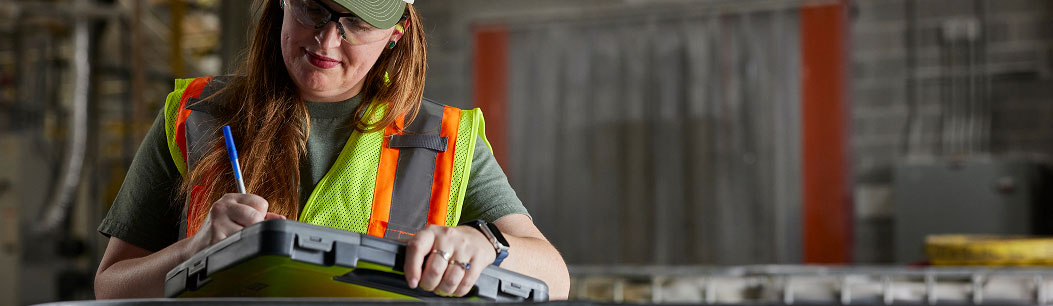
From Testing to Confidence: How Braun Intertec's Pavement Team Supports Smarter Rehabilitation Decisions
Why a coordinated pavement evaluation approach matters
Pavement rehabilitation works best when every step builds on the one before it. Testing defines what exists. Analysis identifies what is viable. Lab work confirms the recommended approach. And the team behind it all connects each phase so the final recommendation reflects your actual conditions, not assumptions.
This is the final post in our pavement evaluation series. In earlier posts, we walked through how strategic testing removes uncertainty, how testing data guides repair recommendations, and how laboratory mix design supports recycled pavement solutions. This post brings it all together and introduces the team that supports you through each stage of the process.
If you are planning a pavement rehabilitation project, start with a conversation about your objectives. Our pavement team can help you identify the right evaluation approach for your site. Contact us
What does a full pavement evaluation look like from start to finish?
A coordinated evaluation follows a logical sequence. Each phase answers specific questions and feeds into the next.
Phase 1: Field Testing Ground Penetrating Radar (GPR), Falling Weight Deflectometer (FWD) testing, and pavement coring work together to define layer thicknesses, structural capacity, and material condition. These tools provide the data foundation for every decision that follows.
Phase 2: Data Analysis and Repair Selection Testing results are used to build an accurate picture of existing conditions. GPR heat maps reveal thickness variability. Core samples show underlying material health. FWD data quantifies load-carrying capacity. Together, these inputs help identify which repair approaches are viable and which ones are not likely to perform well over time.
Phase 3: Laboratory Mix Design (When Applicable) For roadways that are candidates for Cold In Place Recycling (CIR) or Stabilized Full Depth Reclamation (SFDR), a lab mix design evaluates the recycled materials and identifies the most cost-effective stabilizer percentage that meets design requirements. This step connects field data to a recommendation backed by testing.
Phase 4: Recommendations Aligned to Your Project The final recommendation accounts for budget, schedule, traffic impacts, and long-term performance goals. Deliverables typically include testing summaries, thickness mapping, core photos and logs, structural analysis results, and repair recommendations designed to clearly communicate findings and rationale.
What are the benefits of a coordinated pavement evaluation?
When testing, analysis, and lab work are connected through a single team, the process is more efficient, and the outcomes are more reliable.
- Repair strategies are matched to actual pavement conditions, not surface symptoms
- Construction risk is reduced because the structure and materials are well understood before work begins
- Bid quantities are better defined, which helps reduce unanticipated field changes
- Rehabilitation budgets are used more effectively by targeting the right repair in the right location
- Long-term pavement performance is supported by data, not guesswork
These benefits apply whether the project involves a straightforward mill-and-overlay or a more complex recycling or reclamation approach.
Have a project you are evaluating? Our pavement team can help you understand your options and build an evaluation plan that fits your goals. Start the conversation
Who is on the Braun Intertec pavement evaluation team?
Our pavement evaluation team brings experience across field testing, data analysis, structural engineering, and laboratory mix design. Each team member plays a role in connecting the evaluation process so recommendations are coordinated, defensible, and aligned to your objectives.

Why does it matter who is behind the evaluation?
Pavement evaluation is not just about collecting data. It is about interpreting what the data means for your specific roadway, your traffic demands, and your rehabilitation goals. Having a team that works across every phase of the evaluation, from field to lab to final recommendation, means the process stays connected and the recommendation reflects the full picture.
When the same team that runs the GPR and FWD also evaluates the cores, designs the mix, and develops the recommendation, nothing gets lost in translation. That continuity is what supports confident decisions and better long-term performance.
What questions should you ask before starting a pavement project?
If you are planning pavement rehabilitation, here are a few questions worth considering early in the process:
- Do I understand what is happening below the surface, not just what is visible?
- Has the structural capacity of the pavement been evaluated for current and future traffic?
- Are the underlying materials in good enough condition to support the planned repair?
- Would recycling or reclamation provide a better long-term outcome than a surface repair?
- Does the recommended approach align with my budget, schedule, and performance expectations?
These are the types of questions our pavement evaluation process is designed to answer.
Let's talk about your pavement objectives. Every roadway is different, and so are the constraints that drive rehabilitation decisions. Whether you are evaluating a single site or planning a network-wide program, Braun Intertec's pavement team can help you connect testing to recommendations you can stand behind. Contact our pavement team
Services:
Markets:
Contact Us
We are committed to reliable, responsive communication with our clients and potential clients. Our employee-owners are here to help and answer any questions you may have. We look forward to hearing from you.