Understanding Structural Cracks: When to Worry and When to Watch
Services:
Markets:
Contact Us
We are committed to reliable, responsive communication with our clients and potential clients. Our employee-owners are here to help and answer any questions you may have. We look forward to hearing from you.

Understanding Structural Cracks: When to Worry and When to Watch
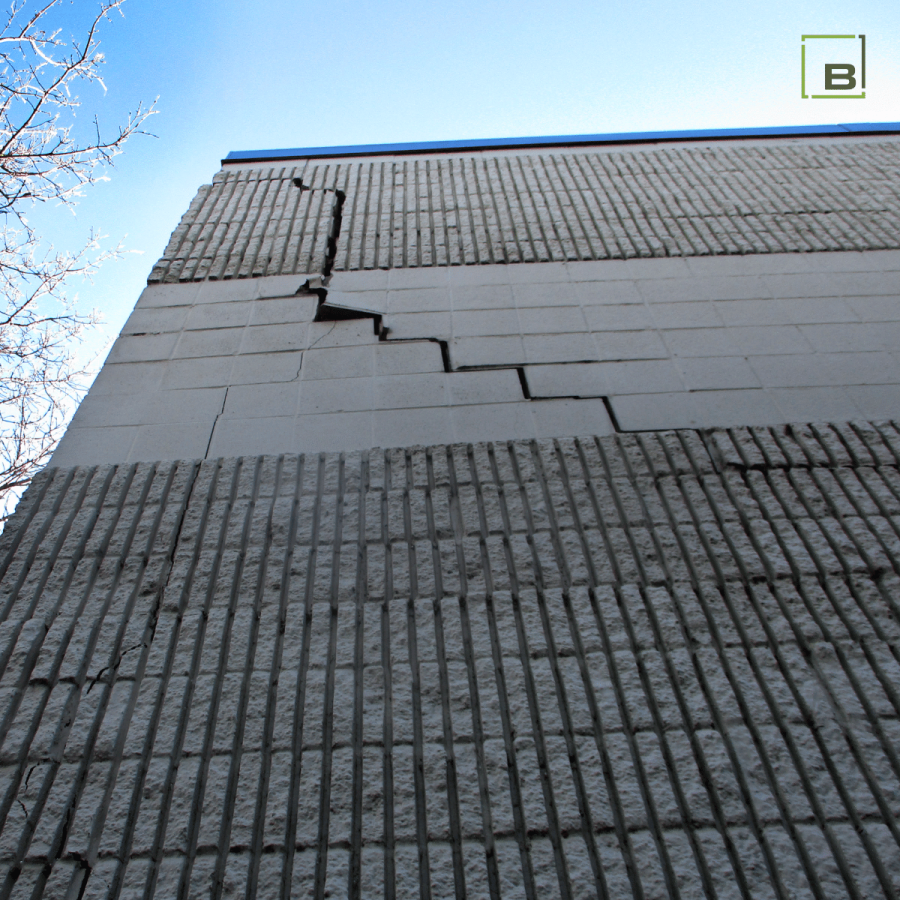
Cracks in buildings are inevitable. Whether it’s a brand-new structure or one that’s been standing for decades, you’ll find them. From hairline cracks that look like they were drawn with a ruler to jagged gaps that could swallow your hand. The real question is: when is a crack just cosmetic, and when is it a structural red flag?
How old is the building?
Depending on the age of the building, some cracks need further inspection. When it comes to new construction, buildings need time to settle. Think of it as their “getting comfortable” phase. Seasonal cycles, soil settlement, and thermal expansion can cause minor cracks. Most are harmless, but sometimes unexpected things may have occurred during construction or design that need to be addressed.
Older buildings (such as 1950s or prior) will typically need an extra look if there appears to be something new or more recent appearing. There may be hidden surprises like uneven load transfers or poorly prepped foundations could be lurking. If a crack has been there for several years (or decades) and has not changed, it likely will continue to just be in that state without doing any harm to other areas. However, if there is a desire to “spruce up” the space, proper repair will be needed otherwise that crack may reappear if not addressed correctly.
Where Are We Seeing the Crack?
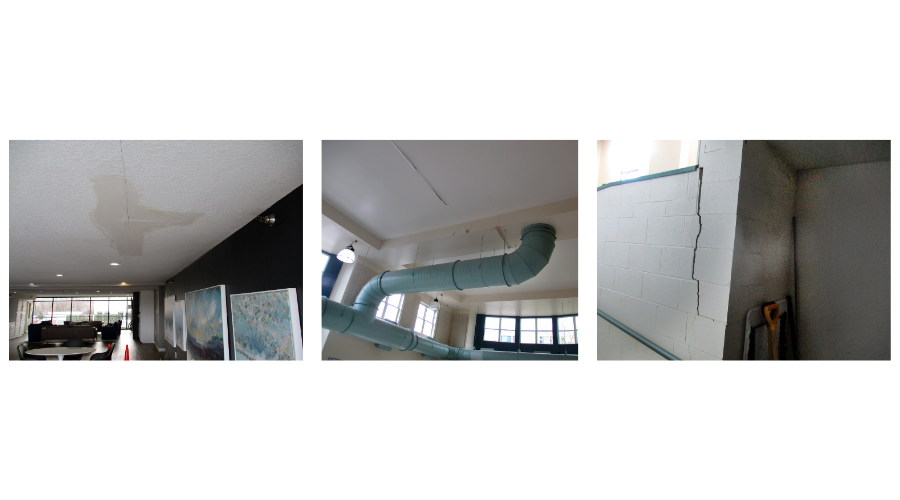
We also need to take into account the location of the crack. Interior cracks are often linked to settlement or deflection of load-bearing components. The crack’s orientation gives clues about the source. We will dive into what this means later in the blog.
Cracks on a building’s exterior can result from various factors, including thermal expansion, soil movements, and environmental stress. If you are seeing a diagonal cracks, that is usually the soil or the foundation saying, “I’m under too much pressure!”
Orientation Tells the Story
The orientation of cracks gives us a clue as to what is causing the crack to happen. A vertical crack most times will typically mean there is thermal movement. Not a structural panic button but watch for water intrusion.
Horizontal cracks can be are a little more serious. These cracks could indicate wall movement from wind or soil pressure. If the wall is bowing, that’s another red flag.
If you are seeing a diagonal crack, this is often a sign of settlement or deflection-related and should be investigated, especially if it is noticed that it continues to widen or propagate further from the time it was initially seen.
Bottom Line
Cracks aren’t always a cause for concern but knowing the difference matters. Our team looks beyond the surface to understand why a crack exists, what it means for the whole structure, and whether action is needed. We combine technical expertise and real-world experiences to help clients make confident, informed decisions. When you partner with Braun Intertec, you gain more than just an assessment. You also gain a trusted consultant who will help you see the full story.
Let us know how we can help! Fill out the “Contact Us” form and someone will be in touch to learn more about the task at hand.
Services:
Markets:
Contact Us
We are committed to reliable, responsive communication with our clients and potential clients. Our employee-owners are here to help and answer any questions you may have. We look forward to hearing from you.