Why Geotechnical Engineering Is Critical for Transmission Line Performance
Services:
Markets:
Contact Us
We are committed to reliable, responsive communication with our clients and potential clients. Our employee-owners are here to help and answer any questions you may have. We look forward to hearing from you.
Why Geotechnical Engineering Is Critical for Transmission Line Performance
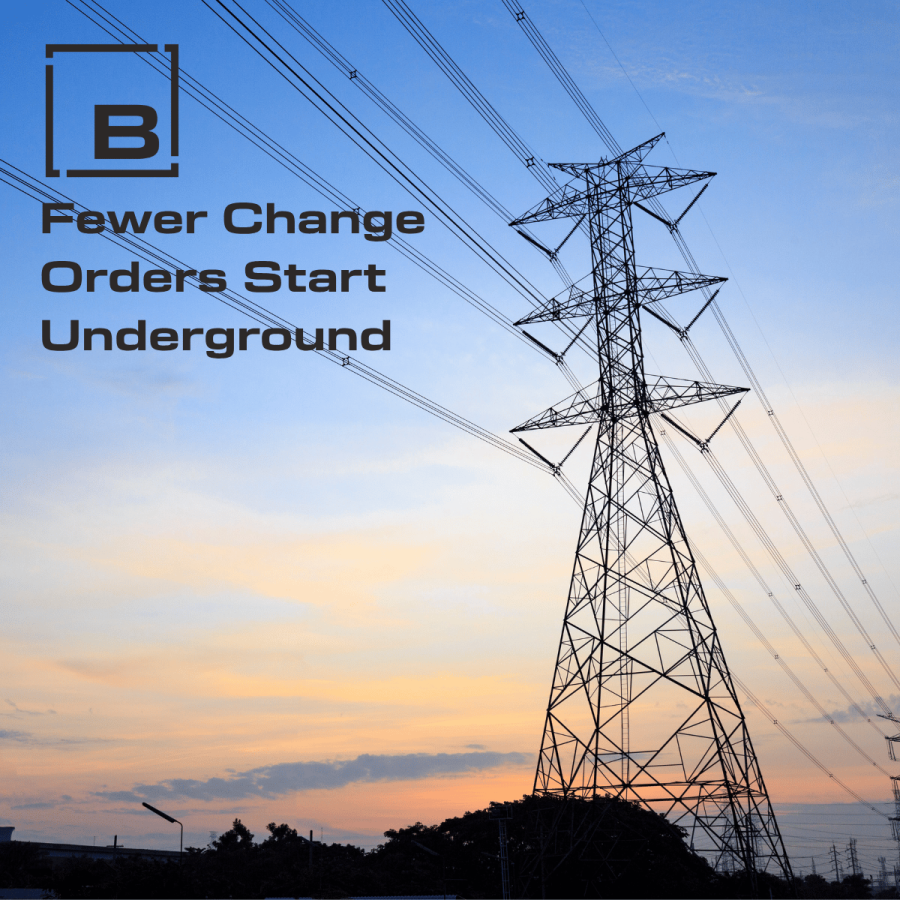
Transmission projects are often evaluated by what is visible: structures, conductors, right of way, and commissioning milestones. Yet many of the cost and schedule risks that affect transmission projects originate below grade. Subsurface conditions influence foundation design, constructability, and long-term performance. When geotechnical decisions are delayed or treated as a checkpoint, utilities can face change orders, installation delays, and avoidable construction risk.
Geotechnical engineering, done early and applied with transmission-specific insight, reduces uncertainty and helps utilities keep projects moving from design through construction.
Why subsurface uncertainty becomes project risk
Unlike a single site development, transmission projects extend across miles of variable terrain and geologic conditions. A design approach that works in one segment may introduce risk in another. That variability is where schedule and budget impacts typically appear: foundation adjustments, equipment access challenges, and construction methods that must change midstream.
Braun Intertec supports power delivery projects with geotechnical evaluations and site exploration and foundation design as part of the preconstruction phase, helping utilities address subsurface constraints before they become construction issues.
Where geotechnical decisions affect cost and schedule
For utilities, geotechnical engineering supports more than design calculations. It informs the decisions that drive execution.
Foundation selection and constructability
Transmission structures are subject to significant lateral and moment loading, making foundation performance a core reliability factor. Transmission work commonly includes drilled shaft or direct embed foundations, and geotechnical recommendations influence both design details and construction methods.
Construction methods that can change in the field
Subsurface conditions can require different installation approaches. For example, drilled shaft excavation stability may necessitate temporary casing or slurry to prevent sidewall collapse, and wet construction methods may be needed when water accumulation and excavation stability criteria cannot be met. These are not minor adjustments; they affect equipment, crew sequencing, and inspection requirements.
Quality verification and performance confidence
When wet methods are used for large drilled shafts, integrity verification (such as cross-hole sonic logging or thermal integrity profiling) may be recommended to confirm results and reduce downstream risk.
Utilities benefit when these realities are anticipated early, so foundation design and construction planning stay aligned.
Reducing change orders and schedule impacts before construction starts
A consistent theme across transmission projects is that construction problems are most expensive when discovered in the field. Braun Intertec’s own guidance on transmission work emphasizes the value of a geotechnical consultant who understands how planning, environmental investigation, right-of-way acquisition, design, construction, and maintenance connect, and how geotechnical and foundation considerations fit into that full process.
In practical terms, this means geotechnical work should not simply produce a report. It should reduce uncertainty for:
- Where foundation types may need to vary
- Where construction methods may change (dry vs. wet excavation, casing, slurry)
- How inspection and documentation will be handled during foundation installation
- What site access or equipment support constraints may affect productivity
A geotechnical approach that is integrated into early decision-making supports more predictable schedules and fewer late-stage redesigns.
Supporting long-term performance and operational reliability
Transmission assets are expected to perform for decades under changing loads and environmental conditions. When foundations are designed with realistic subsurface behavior in mind, the project is better positioned for long-term performance.
Geotechnical recommendations can also flag risks that extend beyond construction. For example, karst and subsurface void potential may require field awareness during excavation and proactive surface water control planning.
In this way, geotechnical engineering supports both project delivery and long-term reliability.
A practical approach to geotechnical support for transmission projects
Braun Intertec supports the power delivery lifecycle from site acquisition through construction and corridor maintenance, including geotechnical evaluations, foundation design, and construction-phase verification.
For utilities, the most effective geotechnical support typically includes:
- Early exploration aligned to likely structure locations and constructability needs
- Recommendations that consider how foundations will be built in real field conditions
- Construction observations and targeted testing to confirm design assumptions and installation quality, when needed
The goal is straightforward: reduce subsurface uncertainty early so it does not become a construction delay later.
Frequently Asked Questions About Geotechnical Engineering for Transmission Lines
Why does geotechnical engineering affect transmission project schedules?
Because subsurface conditions can drive foundation design changes and construction method changes (such as the need for casing or slurry), which directly influence sequencing, productivity, and inspection requirements
What is the biggest risk of delaying geotechnical decisions?
Late discovery of subsurface constraints can trigger redesign, change orders, and schedule impacts once construction is already mobilized. (Guidance: avoidable when geotechnical is integrated early.)
How can utilities reduce foundation construction risk?
By aligning exploration, design recommendations, and construction methods early and applying targeted verification when higher-risk methods (such as wet construction) are used.
Even with strong design, construction execution introduces its own risks. In the next article, we look at how construction materials testing helps verify quality in the field and supports reliable long-term performance.
Services:
Markets:
Contact Us
We are committed to reliable, responsive communication with our clients and potential clients. Our employee-owners are here to help and answer any questions you may have. We look forward to hearing from you.