City of Minneapolis Carbon Fee Study
Services:
Markets:
Contact Us
We are committed to reliable, responsive communication with our clients and potential clients. Our employee-owners are here to help and answer any questions you may have. We look forward to hearing from you.

City of Minneapolis Carbon Fee Study
Our team partnered with the City of Minneapolis Health Department to conduct a Carbon Dioxide equivalent (CO2) Fee Study aimed at strengthening City of Minneapolis Health Department’s industrial outreach program and creating a foundation for a new Pollution Control Annual Registration (PCAR) fee. The study examined emissions across a portfolio of facilities and explored practical opportunities to reduce carbon emissions, while also developing a framework for a fair and sustainable fee structure.
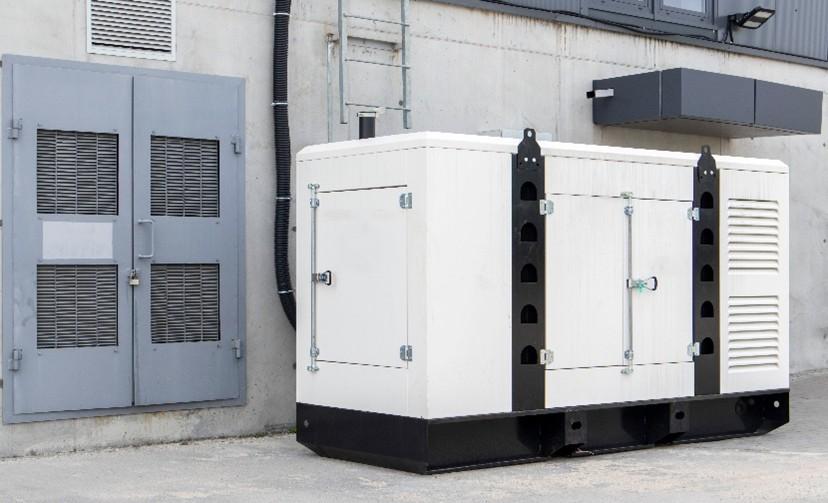
The scope of the study included 36 permitted facilities with reported CO2 emissions. Emissions data from 2021 through 2023 were analyzed alongside liquid fuel usage, on-site equipment inventories, air permits, and publicly available federal records. While emissions declined over this period, the most dramatic drop occurred after the winter storms of 2021, when natural gas shortages forced widespread reliance on diesel generators. Diesel-powered boilers and emergency generators emerged as the largest contributors to CO2 emissions. Since these emissions are not addressed under other fee structures, they became the primary focus of the study.
Phase I of the project concentrated on data analysis and technology review, while Phase II evaluated feasible emission-reduction strategies and developed a fee framework. We examined a range of alternatives, assessing both their technical and economic feasibility. Biodiesel, while an obvious candidate, offered little to no emission reduction compared to diesel and was therefore not pursued further. Ethanol presented slightly better results, and even the option of 50/50 diesel–ethanol blends was considered. While ethanol could reduce emissions modestly, the technology required significant retrofits and conversion kits, which made it cost-prohibitive. Furthermore, successful industrial-scale ethanol projects in the U.S. were not found, making the option too speculative for near-term implementation.
Fuel cells were also evaluated as a potentially transformative solution. Their promise lies in low-carbon operation and long-term sustainability. However, current limitations made them impractical for emergency back-up use. Fuel cells often struggle with the transition time required to deliver power when outages occur, although some vendors now combine fuel cells with batteries to overcome this challenge. Still, the technology remains expensive and commercially immature, with costs far higher than other alternatives. Batteries, on the other hand, have seen successful deployment in larger institutional settings, such as universities, but their application to small emergency back-up generators is limited. High upfront capital costs and finite energy capacity further restrict their use in industrial facilities that may require extended back-up power.
The analysis ultimately concluded that natural gas and propane represent the most viable pathways. Both fuels are readily available, commercially proven, and deliver meaningful reductions in emissions—approximately 29 percent for natural gas and 18 percent for propane compared to diesel. While neither is a perfect zero-carbon solution, both present realistic opportunities to transition facilities away from diesel, especially where ageing generators are due for replacement. Our team identified 58 potential generator replacement projects across the 36 facilities, each tied to cost estimates received directly from manufacturers.
To support these projects, Braun Intertec developed a cost framework for calculating a PCAR fee that could equitably distribute costs across facilities. The framework considered capital and installation costs for new generators, potential contributions from the Green Cost Share Program (covering up to 45 percent of project costs, capped at $150,000), and the cost of staffing one full-time program administrator. Multiple fee scenarios were modeled, including two-year and three-year emissions averages and implementation schedules ranging from five to twenty years. These scenarios provide the City of Minneapolis Health Department with flexibility in how quickly projects are rolled out, while ensuring that fees are set at a level sufficient to fund both program administration and long-term emissions reductions.
In conclusion, the study equips the City of Minneapolis Health Department with a clear, data-driven path to reduce CO2 emissions across its facilities. By focusing on generator replacement with natural gas or propane systems, supported by a fee structure that is both fair and scalable, the City of Minneapolis Health Department can achieve significant carbon reductions, modernize critical infrastructure, and advance its sustainability commitments. At the same time, the analysis of alternatives such as biodiesel, ethanol, fuel cells, and batteries ensures that future opportunities remain on the horizon, even if they are not yet practical today.
Services:
Markets:
Contact Us
We are committed to reliable, responsive communication with our clients and potential clients. Our employee-owners are here to help and answer any questions you may have. We look forward to hearing from you.